



Parasite
Antiparasitics are a class of medications which are indicated for the treatment of parasitic diseases such as nematodes, cestodes, trematodes, and infectious protozoa.
Parasite Isoform Specific Products
All Product Categories
-
Parasite Related Products (2569)
Related Products (2569)

-
Related Compound Screening Libraries (1)
-
Parasite Isoform Comparison
-
Triclabendazole (Standard)
 0 ImagesSynonyms: CGA89317 (Standard)Triclabendazole (Standard) is the analytical standard of Triclabendazole. This product is intended for research and analytical applications. Triclabendazole is an orally active parasite inhibitor. Triclabendazole has anti-Leishmania activity and induces gasdermin E (GSDME)-dependent pyroptosis by caspase-3 activation. Triclabendazole can be used for the research of fasciola hepatica.
-
D-Arabinopyranose (Standard)
 0 ImagesD-Arabinopyranose (Standard) is the analytical standard of D-Arabinopyranose (HY-N7082). This product is intended for research and analytical applications. D-Arabinpyranose is is an orally active antidepressant and a growth inhibitor of C. elegans (IC50 is 7.5 mM). D-Arabinpyranose can penetrate the blood-brain barrier, selectively interfere with the metabolism of D-ribose and D-fructose, and inhibit the growth of nematodes. D-Arabinpyranose can also inhibit the synthesis of cell biofilm and exert antibacterial activity. D-Arabinpyranose activates the ACSS2-PPARγ/TFEB-CRTC1 axis through the lysosomal AXIN-LKB1-AMPK pathway, inducing CRTC1 transcription, exerts antidepressant-like activity. D-Arabinpyranose is the ring-opened form of the aldopentose D-Arabinpyranose (HY-N7082).
-
Fabomotizole
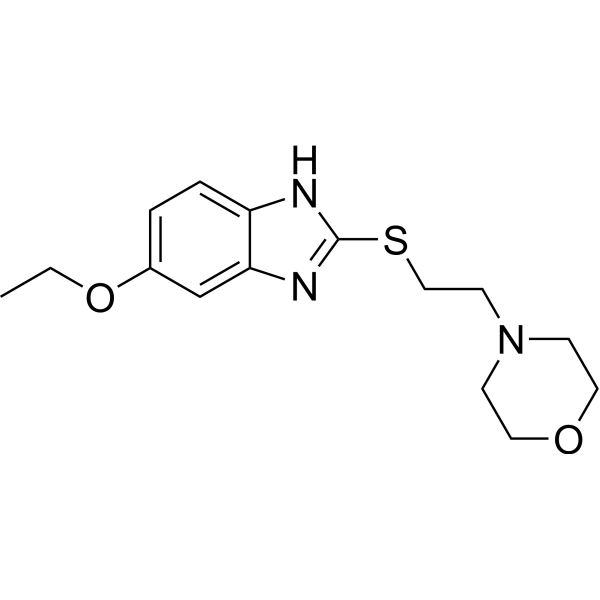 0 ImagesSynonyms: CM346Fabomotizole (CM346) is an insecticide with anxiolytic, antianxiety, and neuroprotective activities and a substrate of p-glycoprotein. Fabomotizole inhibits the ST-segment depression induced by isoproterenol in a rat model of acute subendocardial ischemia. Fabomotizole also inhibits Giardia lamblia and has the potential to inhibit giardiasis. Fabomotizole also targets Sigma1R, NRH:quinone reductase 2 (NQO2), and MAO-A to exert anxiolytic effects.
-
Ipronidazole
 0 ImagesSynonyms: RO-71554Ipronidazole (RO-71554) is an orally active antihistomonal agent, which prevents and ameliorates enterohepatitis in turkeys. Ipronidazole can promotes turkey growth when supplied in feed or drinking water.
-
LY-266500
 0 ImagesLY-266500 is a succinyl CoA synthetase (SCS) specific inhibitor. LY-266500 has inhibitory effects on various parasites, such as Trypanosoma brucei brucei (IC50 =0.6 μM) and Leishmania donovani (IC50 =2.86 μM). LY-266500 can be used for research on parasitic infections.
-
3-Nitrophenyl disulfide
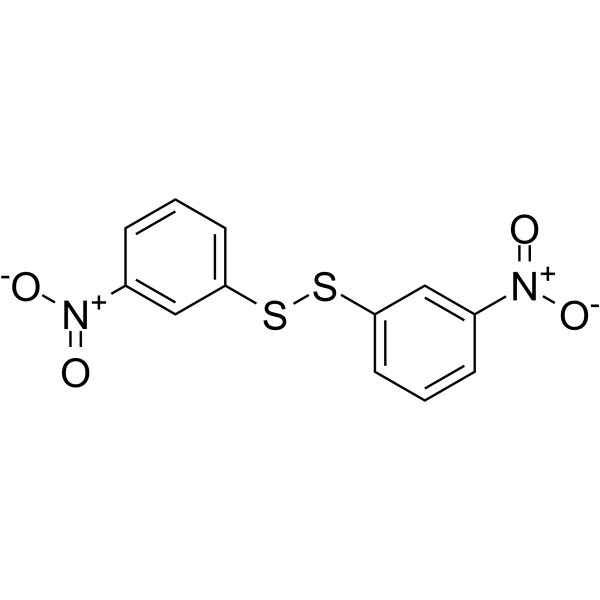 0 ImagesSynonyms: Bis(3-nitrophenyl) disulfide; Nitrophenide3-Nitrophenyl disulfide (Bis(3-Nitrophenyl) disulfide) is an inhibitor of mannitol-1-phosphate dehydrogenase (M1PDH) with IC50 of 3 μM. 3-Nitrophenyl disulfide has antiparasitic activity.
-
Antileishmanial agent-19
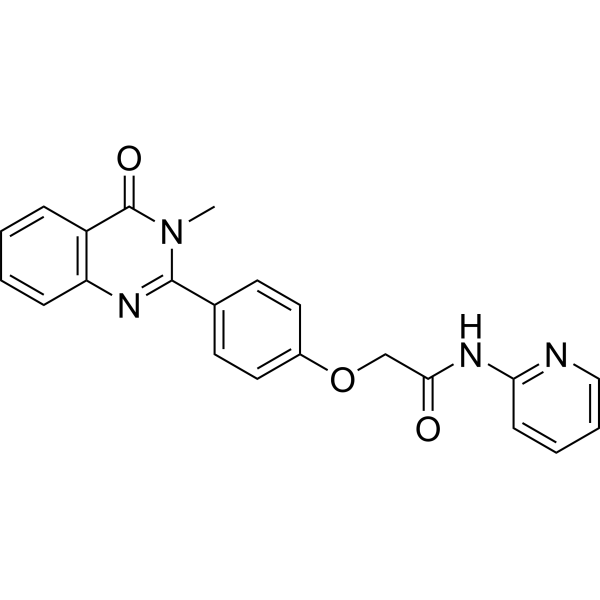 0 ImagesAntileishmanial agent-19 (Compound F27) is an antileishmanial agent, with a IC50 of 3.39 μM for L. donovani promastigotes. Antileishmanial agent-19 inhibits Leishmania prolyl-tRNA synthetase. Antileishmanial agent-19 inhibits host PI3K/Akt/CREB axis-mediated IL-10 secretion. Antileishmanial agent-19 induces autophagy-mediated apoptosis in L. donovani promastigotes. Antileishmanial agent-19 reduces parasite burden in L.d-infected animals.
-
Fenbendazole sulfone
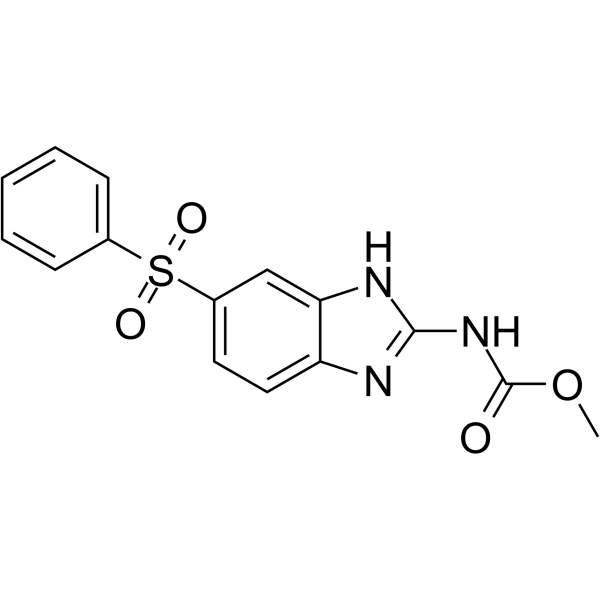 0 ImagesSynonyms: Oxfendazole sulfone; FBZ-SO2Fenbendazole sulfone (Oxfendazole sulfone) is a metabolite of Fenbendazole (HY-B0413) and benzimidazole Anthelmintic. Fenbendazole sulfone occurs in cow's milk. Fenbendazole sulfone serves as a marker residue component in cow's milk.
-
Propamidine isethionate
 0 ImagesCat. No.: HY-130402ACAS No.: 140-63-6Propamidine (isethionate) is an agent in the diamidine class. Propamidine (isethionate) can be used in research of Acanthamoeba keratitis.
-
Miltefosine (Standard)
 0 ImagesSynonyms: HePC (Standard); Hexadecyl phosphocholine (Standard)Miltefosine (Standard) is the analytical standard of Miltefosine. This product is intended for research and analytical applications. Miltefosine is a broad spectrum antimicrobial, anti-leishmanial, phospholipid agent acting by inhibiting the PI3K/Akt activity. Miltefosine is an inhibitor of CTP-phosphocholine cytidyltransferase (CCT).
-
Gypsogenic acid
 0 ImagesGypsogenic acid is a triterpenoid acid that can be isolated from Miconia stenostachya and has antibacterial and trypanoidal activities. The MICs values of Gypsogenic acid for the oral bacterial pathogens Enterococcus faecalis, Streptococcus salivarius, Streptococcus haematococcus, Streptococcus mutans and sobrinus were 50-200 μg/mL. Gypsogenic acid can induce blood cortensite cleavage in isolated mice with IC50 56.6 μM.
-
Fenbendazole analog-1
 0 ImagesFenbendazole analog-1 (compound 9) is a 2-methoxycarbonylamino-derived antiparasitic compound and inhibits rat brain tubulin polymerization. Fenbendazole analog-1 inhibits the growth of the protozoa Giardia lamblia, Entamoeba histolytica, and the worm Trichinella spiralis.
-
Mebendazole (Standard)
 0 ImagesMebendazole (Standard) is the analytical standard of Mebendazole. This product is intended for research and analytical applications. Mebendazole is a highly effective, broad-spectrum antihelmintic against nematode infestations. Mebendazole also exhibits inhibitory effect against glioblastoma multiforme (GBM), inhibits Hedgehog pathway and tubulin polymerization. Mebendazole is orally active and can cross CNS penetration.
-
Estragole-d4
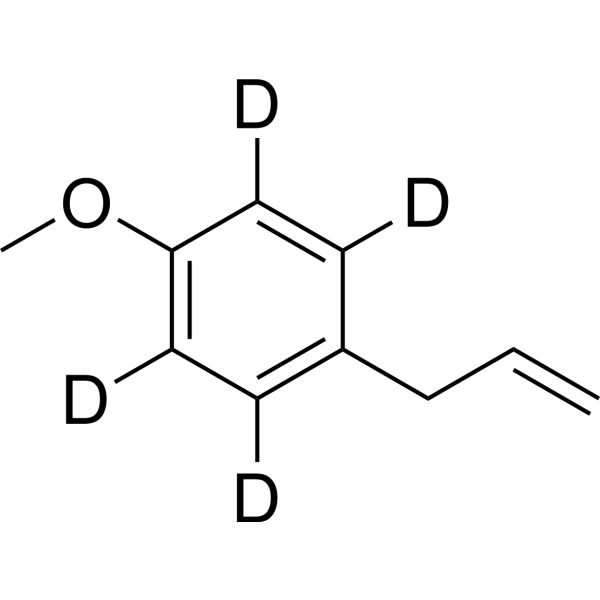 0 ImagesSynonyms: 4-Allylanisole-d4Estragole-d4 is deuterated labeled Estragole (HY-N5060). Estragole (4-Allylanisole) is a relatively nontoxic volatile terpenoid ether and major component of the essential oil from many plants. Estragole significantly triggers Apoptosis, suppresses LPS-induced intracellular ROS production. Estragole activats Nrf-2 and regulates NF-κB. Estragole has anti-toxoplasma, anti-inflammatory, anti-edema, antioxidant and immunomodulatory properties. Estragole blocks DRG neuron excitability. Estragole has improves gastric ulcer activity[10].
-
Robenidine
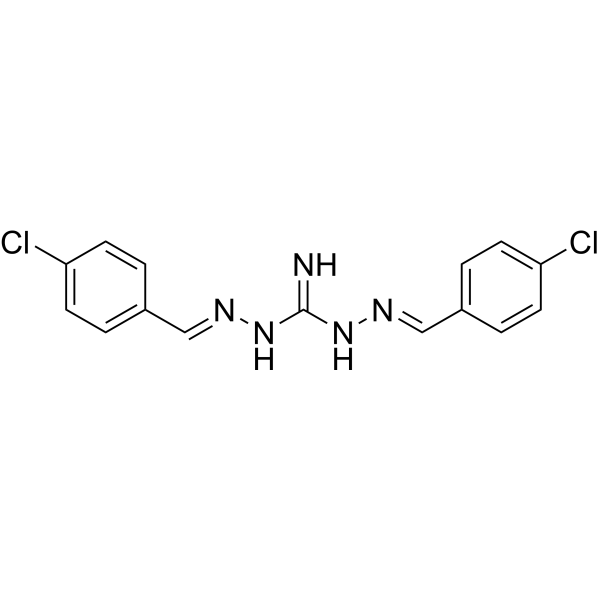 0 ImagesRobenidine is a coccidiostat agent that can be used for the research of coccidiosis caused by parasites in the Eimeria genus.
-
Ibuprofen L-lysine
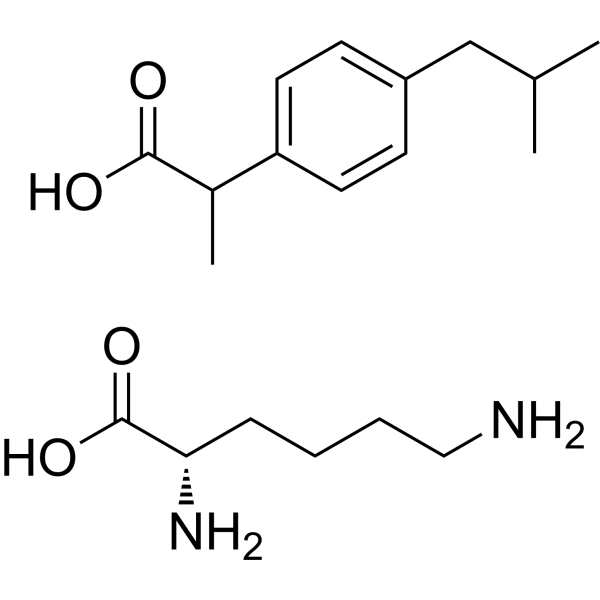 0 ImagesSynonyms: (±)-Ibuprofen L-lysineIbuprofen ((±)-Ibuprofen) L-lysine is a potent orally active, selective COX-1 inhibitor with an IC50 value of 13 μM. Ibuprofen L-lysine inhibits cell proliferation, angiogenesis, and induces cell apoptosis. Ibuprofen L-lysine is a nonsteroidal anti-inflammatory agent and a nitric oxide (NO) donor. Ibuprofen L-lysine can be used in the research of pain, swelling, inflammation, infection, immunology, cancers.
-
AWZ1066S
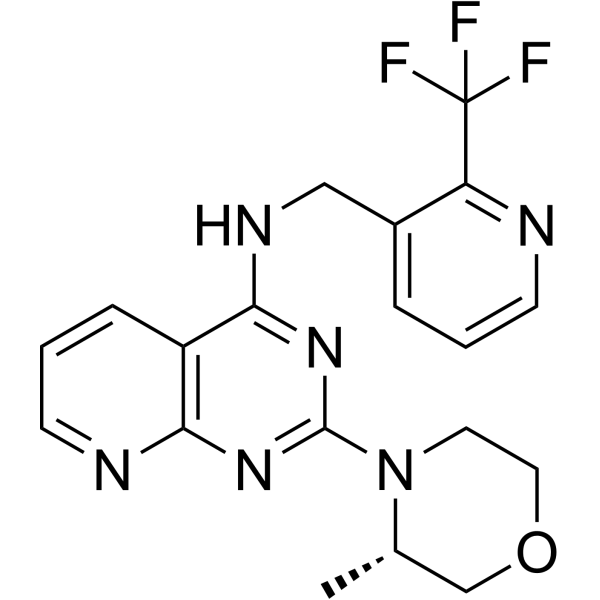 0 ImagesAWZ1066S is a highly potent, specific and orally active anti-Wolbachia agent with EC50 value of 121 nM. AWZ1066S also is a weak CYP2C9 inhibitor and a weak CYP3A4 inducer with IC50 values of 9.7 μM and 37 uM, respectively. AWZ1066S can be used for the research of tropical diseases such as Onchocerciasis (river blindness) and lymphatic filariasis (elephantiasis) .
-
Cyromazine (Standard)
 0 ImagesSynonyms: Cyromazin (Standard); CGA-72662 (Standard)Cyromazine (Standard) is the analytical standard of Cyromazine. This product is intended for research and analytical applications. Cyromazine (CGA-72662) is a triazine insect growth regulator used as an insecticide and an acaricide. It is a cyclopropyl derivative of melamine. Cyromazine works by affecting the nervous system of the immature larval stages of certain insects. Cyromazine reduced the number of germ cells by interfering with the Ecdysone (HY-N0179) signaling pathway. Cyromazine induces renal toxicity attenuated and restored by green tea extract in rats.
-
RYL-552S
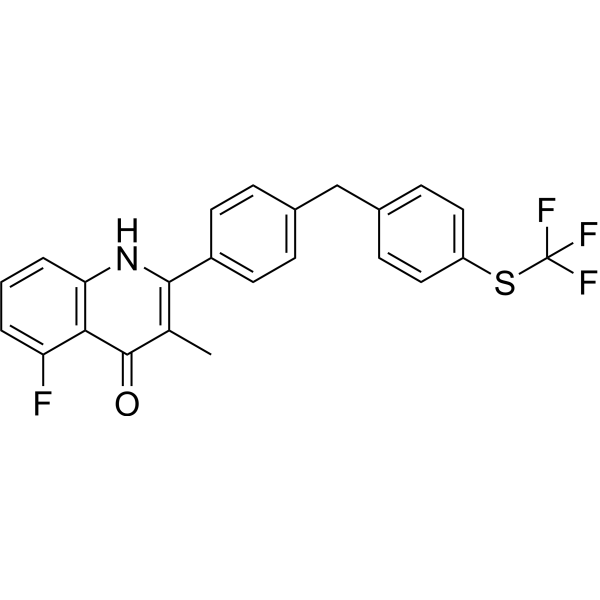 0 ImagesRYL-552S kills drug-resistant strains of Plasmodium falciparum. RYL-552S can efficiently kill asexual blood-stage parasites in vitro.
-
Cabamiquine succinate
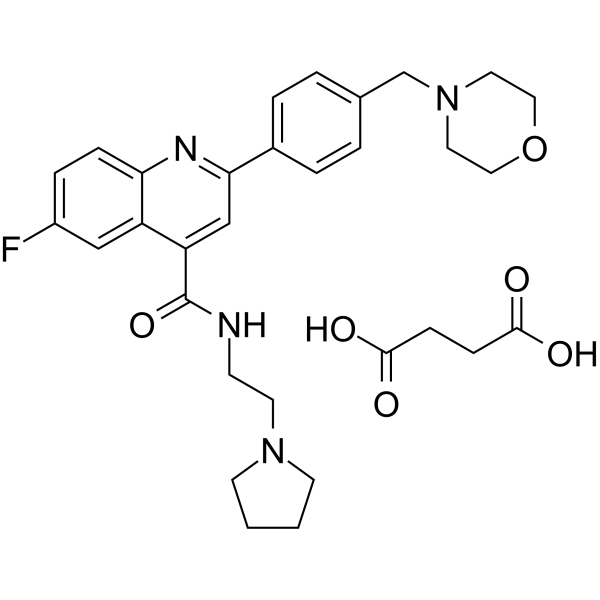 0 ImagesSynonyms: DDD107498 succinate; DDD-498 succinate; M5717 succinateCabamiquine (DDD107498) succinate is a potent and orally active antimalarial agent, inhibits multiple life-cycle stages of the parasite, with an EC50 of 1 nM against P. falciparum 3D7. Cabamiquine succinate inhibits protein synthesis by targeting eEF2/CaMKIII, with an EC50 of 2 nM for WT-PfeEF2.



